Automatic Liquid Filling Machines: Explore Types, Filling Methods and Applications
Automatic liquid filling machines are industrial systems designed to measure and place liquid products into bottles, jars, containers, pouches, or other packaging formats.
They are used for products such as beverages, edible oils, cosmetics, household liquids, chemical formulations, and selected pharmaceutical preparations. By combining controlled liquid measurement with container movement and filling mechanisms, these machines help maintain consistent filling operations across repeated production cycles.
Understanding automatic liquid filling machines involves looking at their filling principles, machine types, process stages, control systems, applications, and quality requirements. The suitable configuration depends on liquid characteristics, container design, filling volume, production arrangement, and applicable regulations.
Context
What Are Automatic Liquid Filling Machines?
Automatic liquid filling machines are mechanical systems that transfer a predetermined quantity of liquid into containers with limited manual intervention. Sensors, pumps, valves, pistons, flow meters, or gravity-based mechanisms can control how liquid moves from a storage tank into individual containers.
A typical system may contain several connected components:
Product holding tank
Liquid transfer pump
Filling nozzles
Flow-control valves
Container conveyor
Sensors for container detection
Programmable control system
Filling-volume adjustment mechanism
Drip-control or nozzle-closing system
The exact configuration varies according to the liquid and container. Thin liquids may flow differently from thick or viscous materials, while liquids containing particles can require specialized filling arrangements.
How Liquid Filling Developed
Early liquid packaging depended heavily on manual measurement and container filling. Mechanical filling equipment gradually introduced piston mechanisms, gravity systems, rotary arrangements, and other methods that improved repeatability.
As manufacturing lines became more automated, filling equipment began connecting with conveyors, capping machines, labeling systems, inspection units, and packaging controls. Modern automatic liquid filling machines can therefore operate as part of a larger packaging line rather than as isolated equipment.
Main Types of Automatic Liquid Filling Machines
Automatic liquid filling machines can be classified according to how the liquid is measured and transferred.
Gravity fillers use the natural flow of liquid from an elevated tank into containers. They are commonly associated with liquids that flow readily and have relatively stable characteristics.
Piston fillers use a piston cylinder to measure a defined quantity before transferring the liquid into the container. This arrangement can accommodate many liquid types and provides controlled volumetric filling.
Pump-based fillers use pumps to move liquid from a supply tank to the filling nozzles. Different pump designs can be selected according to viscosity, flow behavior, and product characteristics.
Overflow fillers fill containers until the liquid reaches a defined level, allowing visual liquid levels to remain relatively consistent even when container volume varies slightly.
Other configurations include:
Time-pressure filling systems
Net-weight filling systems
Rotary filling machines
Inline filling machines
Monoblock filling systems
Multi-nozzle filling machines
Basic Filling Process
The process generally begins when empty containers enter the machine through a conveyor or feeding arrangement. Sensors detect the containers and position them beneath the filling nozzles.
The filling mechanism then transfers the predetermined quantity of liquid. After filling, the nozzles close or move away, and the containers continue toward capping, sealing, labeling, inspection, or subsequent packaging stages.
A simplified process can be represented as:
Container feeding → Position detection → Liquid measurement → Filling → Nozzle withdrawal → Container transfer → Closure and inspection
The sequence may vary depending on the machine design and packaging line.
Importance
Consistent Filling Volumes
Consistent liquid volume is important because packaged products are generally manufactured according to defined quantity specifications. Variations can occur when liquid viscosity, temperature, pressure, container positioning, or machine settings change.
Automatic controls can monitor filling parameters and repeat the programmed sequence across multiple containers. Actual accuracy depends on machine design, calibration, product characteristics, and operating conditions.
Handling Different Liquid Characteristics
Not every liquid behaves in the same way. Water-like liquids flow easily, while oils, creams, syrups, gels, and other viscous materials may require different pumps, nozzle designs, or filling speeds.
Some liquids can foam during filling. Others may contain suspended particles or be sensitive to air exposure. Machine configuration therefore needs to reflect the physical and chemical properties of the product.
Production Line Integration
Automatic liquid filling machines can be integrated with other packaging equipment. A typical line may include:
Container cleaning or preparation equipment
Liquid filling equipment
Capping or sealing machines
Labeling and coding equipment
Vision inspection systems
Conveyors
Case packing equipment
Integration allows container movement and production signals to be coordinated across multiple stages.
Applications Across Industries
Liquid filling systems are used in several industries, with machine configuration varying according to product requirements.
| Industry | Examples of liquids | Important consideration |
|---|---|---|
| Food and beverage | Juices, sauces, oils | Hygiene and quantity control |
| Cosmetics | Lotions, shampoos, liquid formulations | Viscosity and container appearance |
| Household products | Detergents, cleaners | Chemical compatibility |
| Chemical production | Selected liquid formulations | Material compatibility and containment |
| Pharmaceuticals | Selected liquid preparations | Hygiene, accuracy, and regulatory controls |
| Personal care | Liquid washes and lotions | Viscosity and filling behavior |
The table represents general applications. Specific products can require additional equipment, validation, or regulatory controls.
Hygiene and Product Handling
For food, beverage, cosmetic, and pharmaceutical applications, contact surfaces may need materials and cleaning procedures appropriate for the product. Stainless steel is commonly used in equipment that handles many liquid formulations, although the appropriate material depends on chemical compatibility and regulatory requirements.
Equipment design can also consider drainage, accessibility, nozzle cleaning, and prevention of product accumulation.
Recent Updates
Digital Controls and Automation
From 2024 through 2026, automatic liquid filling machines have continued to incorporate digital control systems, electronic sensors, programmable controllers, and operator interfaces. These systems can monitor selected parameters such as filling cycles, container detection, machine alarms, and production counts.
Digital interfaces can also store machine settings for different container formats where the equipment supports such functions. Actual capabilities vary by machine architecture.
Improved Filling Measurement
Electronic flow meters, load cells, servo-driven pumps, and digitally controlled filling mechanisms are increasingly used in modern packaging systems. These technologies can provide more detailed control of liquid movement and filling quantities.
Measurement methods differ according to the product. Volumetric, gravimetric, flow-based, and level-based systems each have different operating principles and application requirements.
Machine Vision
Vision systems are increasingly integrated into automated packaging lines. Cameras can inspect container position, closure presence, label placement, fill level, and selected visible defects.
Vision inspection does not replace every quality test. Laboratory analysis, weight checks, dimensional measurements, or product-specific testing may still be required.
Flexible Container Formats
Packaging lines increasingly need to handle different container shapes and sizes. Adjustable guides, programmable controls, change-part systems, and servo-driven mechanisms can help accommodate multiple formats when supported by the machine design.
Format changes require appropriate setup and verification because nozzle position, filling height, conveyor speed, and container stability can vary between formats.
Digital Maintenance Monitoring
Sensors can monitor selected equipment conditions such as motor temperature, vibration, pump behavior, pressure, or operating cycles. Production records can help identify changes in equipment behavior that require inspection.
Maintenance planning remains dependent on machine documentation, operating conditions, product characteristics, and facility procedures.
Resource Management
Manufacturers are also examining water use, compressed-air consumption, electricity use, and product losses within packaging lines. Better coordination between pumps, conveyors, valves, and filling cycles can help facilities understand resource consumption.
Actual resource use depends on equipment configuration, production rate, liquid characteristics, cleaning procedures, and plant layout.
Laws or Policies
Food and Beverage Requirements in India
Liquid products intended for human consumption can fall under requirements administered by the Food Safety and Standards Authority of India (FSSAI). Packaging materials and food-contact equipment may need to meet applicable food-safety requirements.
The precise requirements depend on the product, packaging material, manufacturing process, and intended use. Facilities should consult the applicable FSSAI regulations and standards for their product category.
Pharmaceutical Applications
Liquid pharmaceutical products can be subject to requirements under India's pharmaceutical regulatory framework, including provisions administered through the Central Drugs Standard Control Organisation and applicable rules.
Equipment used in regulated production may need appropriate hygiene controls, documentation, validation, and manufacturing procedures. Requirements differ according to the product and production environment.
Workplace Safety
Automatic liquid filling machines contain moving parts, electrical systems, pumps, conveyors, compressed-air components, and sometimes heated or chemically active materials. Operators can therefore encounter mechanical, electrical, chemical, or ergonomic hazards.
The Occupational Safety, Health and Working Conditions Code, 2020 provides a broader framework for workplace health and safety in India, subject to implementation and applicable rules.
Environmental Considerations
Liquid packaging facilities can generate wastewater, rejected products, packaging waste, and cleaning residues. Chemical or industrial liquid production may require additional environmental controls.
The Central Pollution Control Board and relevant State Pollution Control Boards provide environmental frameworks for industrial facilities. Applicable requirements depend on the product, waste streams, facility scale, location, and manufacturing process.
Tools and Resources
Production Planning Tools
Digital spreadsheets and production-management systems can record filling volumes, container formats, batch information, machine settings, inspection results, and production quantities.
A basic production worksheet may include:
Product identification
Container dimensions
Target filling quantity
Filling method
Machine settings
Batch information
Inspection results
Cleaning records
Maintenance observations
Measurement and Quality Equipment
Common tools associated with liquid filling operations include:
Precision weighing instruments
Graduated laboratory equipment
Flow measurement instruments
Pressure gauges
Temperature sensors
Liquid-level measurement devices
Leak-detection equipment
Vision inspection cameras
The appropriate measurement method depends on the product and applicable specification.
Technical and Government Resources
Useful regulatory information can be obtained from FSSAI, CDSCO, the Bureau of Indian Standards, CPCB, State Pollution Control Boards, and other relevant government authorities.
Equipment manuals, electrical drawings, filling-nozzle specifications, pump documentation, calibration records, cleaning procedures, and maintenance schedules are also important technical resources for a particular machine.
FAQs
What are automatic liquid filling machines used for?
Automatic liquid filling machines are used to place controlled quantities of liquid into containers. Applications include beverages, edible oils, cosmetics, household formulations, selected chemical products, and regulated liquid preparations.
How do automatic liquid filling machines work?
Containers are positioned under filling nozzles, sensors confirm their location, and a pump, piston, gravity system, flow meter, or another mechanism transfers a predetermined quantity of liquid. Filled containers then move toward subsequent packaging stages.
Which types of automatic liquid filling machines are available?
Common types include gravity fillers, piston fillers, pump-based fillers, overflow fillers, rotary fillers, inline systems, and net-weight filling systems. Selection depends on liquid viscosity, container design, required measurement method, and production arrangement.
Can automatic liquid filling machines handle thick liquids?
Some machines can handle viscous liquids, but the filling mechanism needs to match the product's flow behavior. Piston or pump-based systems are commonly considered for thicker materials, while nozzle size and filling speed also influence performance.
What factors affect liquid filling accuracy?
Liquid viscosity, temperature, foaming, container positioning, pump or piston behavior, calibration, filling speed, and machine settings can influence filling accuracy. Regular measurement and appropriate process controls are important for maintaining consistent results.
Conclusion
Automatic liquid filling machines provide controlled methods for transferring liquids into containers across food, beverage, cosmetic, household, chemical, and selected pharmaceutical applications. Different filling principles, including gravity, piston, pump, overflow, flow-based, and weight-based systems, are suited to different liquid and packaging characteristics. Recent developments have focused on digital controls, measurement systems, machine vision, flexible formats, condition monitoring, and resource management. In India, food safety, pharmaceutical, workplace, and environmental requirements can influence equipment selection and production practices.

Related Post...
Glass Bottle Manufacturing Machines: An Informative Guide to Types, Processes and Applications
Updated: September 26, 2026
Read More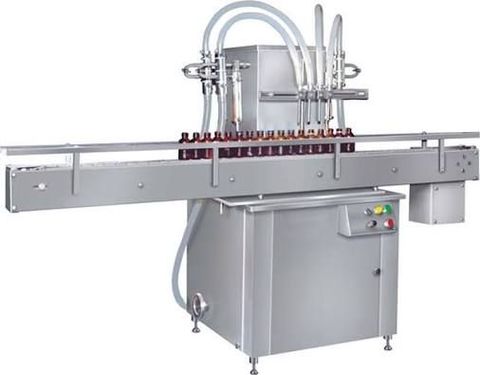
Automatic Liquid Filling Machines: Explore Types, Filling Methods and Applications
Updated: September 26, 2026
Read More