Glass Bottle Manufacturing Machines: An Informative Guide to Types, Processes and Applications
Glass bottle manufacturing machines are industrial systems used to shape molten glass into bottles and other hollow glass containers. These machines coordinate processes such as forming, moulding, cooling, inspection, and handling.
Glass bottles are widely used for beverages, food products, cosmetics, pharmaceuticals, household products, and other packaged materials.
Modern glass bottle manufacturing machines combine mechanical systems with electronic controls, sensors, automated inspection, and temperature monitoring. Understanding how these machines work provides useful background on glass production, bottle quality, manufacturing stages, energy management, and current industrial developments.
Context
What Are Glass Bottle Manufacturing Machines?
Glass bottle manufacturing machines convert prepared molten glass into containers with defined shapes, dimensions, wall thicknesses, and neck configurations. The process begins with glass-forming materials that are heated until they reach a suitable molten condition.
A measured portion of molten glass, commonly called a gob, is delivered to a forming machine. The gob is then shaped inside moulds through controlled mechanical movement and air pressure.
A typical glass bottle production line can contain several connected stages:
Raw-material preparation
Glass melting
Molten-glass conditioning
Gob formation and delivery
Bottle moulding
Controlled cooling
Surface treatment where applicable
Inspection
Packaging and pallet handling
The exact arrangement depends on the type of bottle, glass composition, production volume, mould design, and quality requirements.
How Glass Bottle Manufacturing Developed
Glass containers have been produced for centuries, initially through manual forming techniques. Early glassmaking required skilled workers to shape molten glass using tools and moulds.
Industrial production changed significantly when mechanical forming equipment was introduced. Automated systems allowed multiple bottles to be produced through repeated forming cycles with more consistent dimensions.
Modern equipment uses sensors, programmable controls, automated mould changes, electronic timing systems, and inspection technologies. These developments have made glass bottle production a highly coordinated industrial process.
Main Types of Glass Bottle Manufacturing Machines
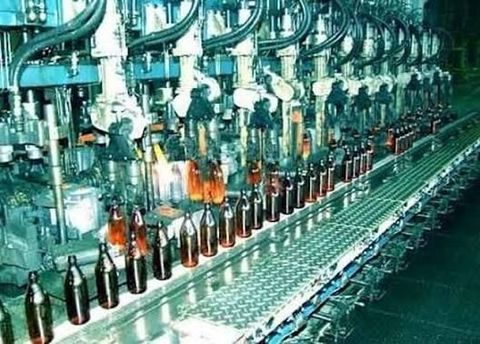
Glass bottle forming machines are commonly classified according to the forming process and machine configuration. Individual Section machines, often called IS machines, are widely used for container production. These machines can operate multiple sections that independently form bottles from prepared glass gobs.
The two primary forming approaches are blow-and-blow and press-and-blow. Blow-and-blow forming uses air pressure during the preliminary and final forming stages, while press-and-blow systems use a mechanical plunger during the initial forming stage before the final bottle shape is produced.
Other equipment used in the production line includes:
Glass melting furnaces
Gob forming systems
Bottle forming machines
Annealing lehrs
Inspection machines
Conveyor systems
Surface treatment equipment
Palletizing and handling systems
Basic Manufacturing Process
Glass bottle manufacturing begins with the preparation of raw materials such as silica sand, soda ash, limestone, and other approved glass-forming materials. Recycled container glass, known as cullet, may also be incorporated into the batch according to the formulation and production process.
The batch is melted in a furnace at high temperature. The molten glass is conditioned before being divided into measured gobs and delivered to the forming machine.
The forming machine shapes each gob inside moulds. Newly formed bottles then enter an annealing lehr, where controlled cooling reduces internal stresses in the glass.
After annealing, bottles can pass through inspection equipment that checks selected physical characteristics. Products meeting the applicable specifications continue to packaging and handling stages.
Importance
Consistent Bottle Dimensions
Glass bottles need controlled dimensions so that closures, labels, filling equipment, and packaging systems can operate correctly. Manufacturing machines use moulds, timing controls, mechanical movements, and process monitoring to produce repeated shapes.
Important dimensions can include bottle height, diameter, neck finish, opening size, wall thickness, and base configuration. The required tolerances depend on the bottle design and intended application.
Material and Energy Management
Glass production requires substantial thermal energy because raw materials must be melted at high temperatures. Furnace design, insulation, combustion controls, heat recovery, and cullet usage can influence energy requirements.
Using recycled glass can also reduce the amount of raw material that needs to be melted from its initial state. The actual effect depends on cullet quality, furnace operation, glass composition, and production conditions.
Bottle Strength and Quality
Bottle performance depends on glass composition, forming conditions, cooling, dimensions, and surface condition. Internal stresses must be controlled during annealing because unsuitable cooling can affect mechanical characteristics.
Inspection systems can examine bottles for selected defects such as cracks, dimensional variation, surface imperfections, or irregular shapes.
Applications
Glass bottles are used across many industries.
| Industry | Typical glass containers | Main consideration |
|---|---|---|
| Beverage | Bottles for carbonated and non-carbonated drinks | Pressure and closure compatibility |
| Food | Jars and bottles | Food-contact requirements |
| Pharmaceutical | Bottles and vials | Dimensional and quality controls |
| Cosmetics | Perfume and cosmetic containers | Shape and surface appearance |
| Household | Containers for selected products | Chemical compatibility |
| Specialty products | Decorative or technical containers | Mould and design requirements |
The required glass composition, forming process, inspection criteria, and packaging arrangement vary according to the intended application.
Production Planning
Glass bottle manufacturing requires coordination between furnace operation, gob formation, moulding, annealing, inspection, and material handling. A change in bottle design can affect mould configuration, gob weight, forming timing, cooling conditions, and downstream equipment.
Production planning therefore considers bottle dimensions, glass composition, mould specifications, furnace capacity, inspection requirements, and packaging configuration.
Recent Updates
Automation and Digital Controls
From 2024 through 2026, glass container manufacturing has continued to incorporate digital controls and automated process monitoring. Electronic systems can coordinate forming-machine movements, timing sequences, temperature readings, and production data.
Operators can monitor selected parameters through digital interfaces. The available measurements depend on the machine architecture, sensors, and factory control system.
Machine Vision Inspection
Automated vision systems are increasingly used to inspect glass containers at high production rates. Cameras and specialized sensors can identify selected dimensional and surface characteristics.
Inspection may include bottle shape, neck finish, surface defects, cracks, and other characteristics that can be detected through imaging or associated measurement systems.
Vision inspection does not replace every laboratory or physical test. Different quality characteristics require different measurement methods.
Advanced Process Monitoring
Sensors can monitor furnace temperature, glass temperature, forming conditions, machine movement, cooling parameters, and other process variables. Data from these systems can be analyzed to identify changes in production conditions.
Digital records can also connect bottle specifications with production batches and inspection results. This supports more structured production documentation.
Energy Management
Energy efficiency remains an important area of development because glass melting requires sustained high-temperature operation. Modern systems may use improved furnace insulation, combustion controls, heat recovery, and optimized airflow.
Electrical equipment such as drives and motors can also be monitored to understand energy use across the production line. Actual energy performance varies according to furnace design, glass composition, production rate, and operating conditions.
Increased Use of Recycled Glass
Cullet is an important part of glass-container production. Recycled glass can be processed and returned to the furnace as part of the raw-material batch when its composition and cleanliness meet the required conditions.
Automated sorting and material-quality monitoring can help identify unsuitable material before it enters the melting process.
Digital Maintenance
Condition monitoring systems can collect information about vibration, temperature, motor load, lubrication conditions, and other equipment parameters. Maintenance teams can use these records to identify changes that require inspection.
The approach to maintenance depends on equipment design, operating conditions, manufacturer documentation, and plant procedures.
Laws or Policies
Environmental Requirements in India
Glass bottle manufacturing involves high-temperature furnaces, combustion systems, particulate emissions, industrial noise, solid residues, and significant energy use. Environmental requirements therefore form an important part of plant operation.
The Central Pollution Control Board and relevant State Pollution Control Boards provide environmental frameworks applicable to industrial facilities. Requirements can vary according to plant location, production process, fuel type, emissions, and facility scale.
Air Emission Controls
Glass melting furnaces can produce particulate matter and gaseous emissions. Facilities may use filtration, combustion controls, monitoring equipment, and other emission-management systems according to applicable requirements.
The specific environmental controls depend on the furnace technology, fuel, glass formulation, production capacity, and regulatory conditions.
Workplace Safety
Glass bottle manufacturing involves hot glass, furnaces, moving machinery, conveyors, compressed air, mould systems, and automated equipment. Workers may therefore encounter thermal, mechanical, electrical, and material-handling hazards.
The Occupational Safety, Health and Working Conditions Code, 2020 provides a broader framework for workplace safety and working conditions in India, subject to implementation and applicable rules.
Product and Packaging Requirements
Bottles intended for food, beverages, pharmaceuticals, or cosmetics may be subject to product-specific packaging requirements. Food-contact materials may fall under requirements administered by the Food Safety and Standards Authority of India.
Pharmaceutical containers can involve additional requirements under the applicable regulatory framework. Manufacturers should verify the specifications relevant to the intended application.
Waste and Recycling
Glass production can generate rejected containers, cullet, refractory residues, packaging waste, and other industrial materials. Suitable glass waste can often re-enter the production process when it meets the required material criteria.
Waste-management obligations depend on the material type and facility processes. Applicable requirements should be checked with the relevant environmental authority.
Tools and Resources
Process Monitoring Equipment
Glass bottle plants use instruments to monitor temperatures, dimensions, pressures, machine movement, and other production variables. Common equipment includes:
Infrared temperature measurement instruments
Digital thermocouples and temperature sensors
Dimensional gauges
Pressure measurement instruments
Glass thickness measurement equipment
Vision inspection cameras
Vibration monitoring instruments
Calibration and measurement procedures should correspond to the required production specifications.
Quality Testing
Laboratories can examine bottles for dimensional accuracy, glass thickness, internal stress, thermal behavior, pressure resistance where applicable, and other characteristics.
Testing requirements depend on the container type and intended use. Food, pharmaceutical, beverage, and specialty containers can have different quality specifications.
Production Planning Tools
Digital production systems can record bottle designs, mould configurations, gob weights, production quantities, inspection results, and equipment conditions.
Spreadsheets can also be used to track production batches, rejected containers, cullet quantities, energy measurements, maintenance activities, and laboratory results.
Government and Technical Resources
Useful regulatory and technical information can be obtained from the Bureau of Indian Standards, Central Pollution Control Board, State Pollution Control Boards, FSSAI, and other relevant government authorities.
Equipment manuals, furnace documentation, mould drawings, glass-composition specifications, inspection procedures, and maintenance records provide additional information for plant operation.
FAQs
What are glass bottle manufacturing machines used for?
Glass bottle manufacturing machines shape molten glass into bottles and other hollow containers. They are part of production lines that can include melting furnaces, gob systems, forming machines, annealing equipment, inspection systems, and material handling equipment.
How do glass bottle manufacturing machines work?
A measured gob of molten glass is delivered into a forming machine. The glass is shaped inside moulds through mechanical movement and air pressure, after which the newly formed bottle passes through controlled cooling and inspection stages.
What types of glass bottle manufacturing machines are available?
Common forming technologies include Individual Section machines using blow-and-blow or press-and-blow processes. A complete production line may also include furnaces, gob feeders, annealing lehrs, inspection machines, conveyors, and handling equipment.
What materials are used in glass bottle manufacturing machines?
The machines process molten glass made from materials such as silica sand, soda ash, limestone, and other formulation components. Recycled glass cullet can also be incorporated into suitable glass batches according to production specifications.
How is glass bottle quality checked?
Quality checks can include dimensional measurement, wall-thickness assessment, visual inspection, internal-stress measurement, surface inspection, and application-specific physical tests. Automated vision systems can perform selected inspections while laboratory methods provide additional measurements.
Conclusion
Glass bottle manufacturing machines transform prepared molten glass into containers through controlled gob formation, moulding, annealing, inspection, and handling. Different forming technologies and supporting equipment are selected according to bottle design, glass composition, production requirements, and quality specifications. Recent developments have emphasized automation, machine vision, digital process monitoring, energy management, recycled-glass processing, and condition monitoring. In India, environmental rules, workplace requirements, and product-specific packaging regulations influence how glass bottle manufacturing facilities are designed and operated.

Related Post...
Plastic Transfer Molding Machines: An Overview of Systems and Operating Methods
Updated: September 17, 2026
Read More
Automatic Liquid Filling Machines: Explore Types, Filling Methods and Applications
Updated: September 26, 2026
Read More