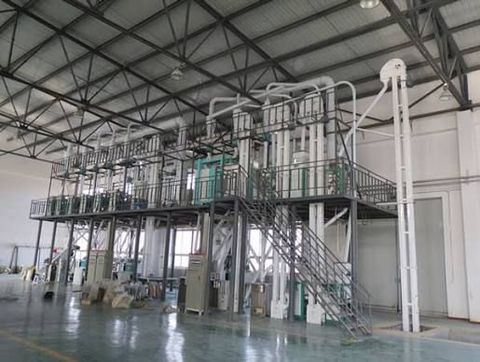
Overview of Industrial Lentil Cleaning Machines in Processing
Industrial lentil cleaning is a critical first stage in pulse processing that removes foreign materials, impurities, and defective seeds to protect downstream equipment, improve product purity, and meet food or seed quality standards.
Raw lentils arriving from the field typically contain dust, chaff, stems, stones, soil, weed seeds, broken or immature kernels, and other contaminants. A well-designed cleaning line uses sequential mechanical, air, density, and optical separation technologies to achieve high purity while minimizing product loss. This overview examines the main machine types, process stages, key technologies, and their role in industrial lentil processing.
Importance of Cleaning in Lentil Processing
Effective cleaning delivers several benefits:
- Higher final product purity and market value.
- Protection of hullers, splitters, polishers, and optical sorters from abrasive wear or damage caused by stones and hard contaminants.
- Improved efficiency and yield in subsequent dehulling, splitting, and grading steps.
- Compliance with food safety and export quality requirements.
- Reduced risk of contamination in storage and finished goods.
Cleaning systems are typically modular and can be configured for different capacities, from medium-scale plants to high-volume continuous operations.
Main Stages of Industrial Lentil Cleaning
Cleaning is performed in progressive stages, each targeting specific types of impurities.
Intake and Pre-Cleaning
Raw lentils are received via elevators, conveyors, or dumping systems and pass through pre-cleaners. These machines remove large debris (straw, stalks, leaves) and light impurities (dust, chaff) using coarse screens and aspiration (air suction). Pre-cleaning reduces the load on finer equipment and improves overall line efficiency.
Fine Cleaning and Screening
Air-screen cleaners (also called seed cleaners or precision cleaners) combine vibrating or rotary screens of different mesh sizes with controlled airflow. Screens separate materials by size—removing oversized and undersized particles—while aspiration lifts light impurities. Flat-screen eccentric or vibratory designs and rotary drum screens are commonly used for lentils. Proper screen selection and air adjustment are essential for high separation efficiency with minimal good-product loss.
Destoning
Destoners (or stone separators) remove heavy impurities such as stones, glass, metal fragments, and mud clods that have similar size to lentils but higher density. These machines typically use vibration, air flow, and an inclined deck to stratify material so heavier particles migrate differently from the lentils. Destoning is vital for protecting abrasive rollers in later hulling stages.
Gravity Separation
Gravity separators further refine the product by density differences. On an oscillating, inclined deck with controlled airflow, lighter materials (immature, damaged, or hollow seeds) and remaining light impurities are separated from sound, denser lentils. This step significantly improves purity when size-based separation alone is insufficient.
Additional Separation Technologies
Indented cylinder separators can classify by length or shape. Magnetic separators remove ferrous metal. Some lines include de-awners or specialized aspiration channels for further light-impurity removal.
Optical (Color) Sorting
As a final high-precision step, optical or color sorters use cameras and image processing (often with AI support) to detect and eject discolored, stained, defective, or foreign seeds that mechanical methods cannot remove. This stage is essential for premium food-grade or export-quality lentils.
Key Machine Types and Technologies
- Pre-cleaners and air-screen cleaners: Screen + aspiration systems for size and light-impurity removal.
- Destoners: Density-based heavy-impurity separation.
- Gravity separators: Fine density grading.
- Indented cylinders and graders: Size and shape classification.
- Optical color sorters: Defect and color-based rejection.
- Supporting equipment: Elevators, conveyors, dust collection systems, storage bins, and automated controls (PLC/SCADA) for continuous, monitored operation.
Modern plants emphasize gentle handling to minimize breakage, adjustable settings for different lentil varieties (red, green, etc.), hygienic design, and efficient dust extraction.
Integration in the Overall Processing Line
Cleaning is usually the first major process after intake and before conditioning, dehulling/splitting, polishing, final sorting, and packaging. Uniform, clean lentils improve the performance and yield of hullers and splitters. Closed conveying systems and dust control maintain hygiene and workplace safety. Capacity matching across machines, proper screen and air settings, and regular maintenance are important for consistent results.
Performance Factors and Considerations
Key performance indicators include impurity removal efficiency, product purity (often targeted at very high levels for food-grade lentils), recovery rate (minimizing loss of good lentils), capacity (tons per hour), and energy/dust-control efficiency. Factors influencing results include incoming impurity levels, moisture content, lentil variety and size distribution, and correct machine adjustment. Operators typically fine-tune air flows, screen apertures, deck angles, and feed rates based on the specific lot.
Industrial lentil cleaning machines form a multi-stage system that progressively removes coarse debris, light impurities, stones, density-based contaminants, and visual defects. Core equipment includes pre-cleaners, air-screen cleaners, destoners, gravity separators, and optical color sorters, supported by conveying and dust-control systems. When properly designed and operated, these machines deliver high-purity lentils, protect downstream processing equipment, and support efficient production of food-grade or seed-grade products. Selecting and integrating the right combination of technologies according to capacity, raw material quality, and end-product specifications is essential for optimal performance in modern lentil processing plants.

Related Post...
Chemical Etching: Equipment & Precision Material Processing Guide
Updated: November 02, 2026
Read More
Industrial Process Water Recycling: Learn About Systems, Filtration and Reuse Practices
Updated: September 15, 2026
Read More